Gender-Based Variation in the Prevalence of Cerebral Palsy in Pakistan
Ammara Rafique
Indus College of Physical Therapy and Rehabilitation, Indus University of Health Sciences
Cerebral palsy (CP) is a neurological disorder that affects motor movement, posture, and tone as a result of a persistent encephalopathy acquired during fetal life, infancy, or early childhood development. This review aimed to gather the pooled prevalence to assess the gender-based variation of CP in different cities of Pakistan. A comprehensive literature review was conducted from July 2023 to Nov. 2023, and search terms ‘Cerebral Palsy’ or ‘CP’, ‘gender’ or ‘sex’, ‘Prevalence’, and ‘Pakistan’ were utilized. Published literature from different databases including Google Scholar, Pak Medi Net, PubMed, and Science Direct were employed to retrieve articles. From a total of 6,560 articles published during 2000-2022, eight were selected. Titles and abstracts of all studies were reviewed, and full texts of relevant studies were obtained from cohort, chain referral, cross-sectional, descriptive retro-prospective, and survey studies. Majority of studies reported a greater male-to-female ratio of CP and a few reasons for this disparity are discussed.
Keywords: Cerebral Palsy, Gender based variation, Pakistan, Prevalence, Survey.
Neurological disorders are caused by impaired electrical impulses throughout the brain and/or nervous system, that impair the normal functioning of the peripheral or central nervous system.1 These disorders are the leading cause of disability and the second biggest cause of mortality around the world. A diverse range of neurological disorders is based on structural, biochemical, or electrical abnormalities. Several bacterial, fungal, parasitic, and viral infections can alter the nervous system, with neurological symptoms occurring due to the infection or an immune response. There are over 600 well-known neurological disorders worldwide, including acute spinal cord injury, Alzheimer's, amyotrophic lateral sclerosis, bell's palsy, brain tumors, cerebral aneurysm, cerebral palsy, epilepsy, encephalitis, Guillain-Barre syndrome, hydrocephaly, meningitis, mental retardation, multiple sclerosis, muscular dystrophy, myasthenia gravis, neurocutaneous syndrome, Parkinson's disease, peripheral neuropathy, septicemia, stroke, and many more.
Cerebral palsy (CP) is a neurological disorder that affects motor movement, posture, and tone as a result of a persistent encephalopathy acquired during fetal, infancy, or early childhood development.1 Worldwide the prevalence of CP is nearly 2.1/1000 live births.2 CP is often regarded as a disorder that affects both men and women, with a variety of risk factors determining its incidence. Common risk factors associated with CP encompass birth asphyxia, bleeding disorders, genetic factors, preterm birth, low birth weight, multiple births, maternal health issues, maternal infection, intrauterine growth restriction, Rh incompatibility, and many more. These risk factors are more likely to affect in prenatal developmental period as compared to perinatal and postnatal ones.3 In Pakistan, the epidemiology and etiology of CP has yet to be determined.4,5 Each case of CP is distinct. Interventions are used differently depending on the underlying etiology, the level of impairment, the kind of CP, and concomitant disorders. As a result, determining etiological factors is critical for addressing each individual's condition.
There is no specific test to confirm CP, hence the diagnostic process may take some time. In most cases, the diagnosis is made within the first two years. Physicians typically assess reflexes, posture, coordination, tone of muscles, and other characteristics that may take months or even years to develop for diagnosis. Healthcare professionals frequently perform tests including EEG, MRIs, and cranial ultrasonography to get an image of the brain. Although CP does not currently have a well-established treatment, several remedial methods can help a person live a functional life. Early therapy generally increases the likelihood that an individual with CP may overcome developmental impairments.
Estimating the prevalence of CP in Pakistan has been a challenging task due to limited resources, inadequate healthcare infrastructure, and regional disparities. These regional disparities seem to be influenced by urbanization, socioeconomic level, and access to healthcare services.
Nonetheless, several investigations have been carried out to determine the frequency of CP in various cities of the country. To obtain the most current and accurate information on the prevalence of CP in Pakistan and any potential gender variations, it would be advisable to consult the latest research articles, reports from health organizations, or epidemiological studies conducted in the region. This review aimed to gather the pooled prevalence to assess the gender-based variation of CP in different cities of Pakistan.
A comprehensive literature review was conducted in July 2023 to November 2023, and search terms ‘Cerebral Palsy’ or ‘CP’, ‘gender’ or ‘sex’, ‘Prevalence’, and ‘Pakistan’ were utilized. The published literature from different databases including Google Scholar, PakMediNet, PubMed, and ScienceDirect was employed to retrieve articles from the years 2000-2022. Titles and abstracts of all studies were reviewed, and full texts of relevant studies were obtained from cohort, chain referral, cross-sectional, descriptive retro-prospective, and survey studies. Eligibility screening of the studies was conducted in a blinded standardized way by 2 independent reviewers. Of the 6,560 articles searched, 80 duplicates and 6472 irrelevant publications were excluded. The eight articles that finally accord with the inclusion criteria were analyzed after screening the article titles, the abstracts, and the whole texts.
Limited researchers contributed to collecting data on CP-inflicted cases in different cities including Gujranwala6 (n=1) followed by Islamabad7 (n=1), Karachi8,9 (n=2), Lahore10 (n=1), Mansehra11 (n=1), Rawalpindi12 (n=1), and Swabi13 (n=1) (Table 1). A total of 1616 patients were included in the present review (Table 1). Most studies reported a higher male-to-female ratio of CP in Pakistan (Figure 1). The understanding of CP and its causes is complex and evolving, and research in this field continues to provide new insights into the factors influencing its development. The reasons for this potential gender difference are not fully understood but can be influenced by a combination of several factors. When it comes to how males and females respond
Table 1: Summary of studies on CP carried out in different cities of Pakistan |
|||||
Author Year |
City in Pakistan |
Study Type |
Study Year |
Sample Size |
Reported male-to-female ratio |
Ali et al., 2017 |
Gujranwala |
Descriptive retro-prospective study |
2015 to 2016. |
69 |
1.4:1.1 |
Khan et al., 2022 |
Islamabad |
Cohort |
2020 to 2021. |
89 |
2.2:1 |
Bangesh et al., 2015 |
Karachi |
Snowball sampling |
2010 to 2011 |
20 |
4:1 |
Rafique et al. 2020 |
Karachi |
Chain referral sampling |
2010 to 2016 |
658 |
1.4:1 |
Mansha et al., 2014 |
Lahore |
Cross-sectional study |
2006 to 2007 |
100 |
1.3:1.7 |
Keramat et al., 2022 |
Mansehra |
Cross-sectional survey |
2018 |
300 |
1.4:0.8 |
Khan et al., 2014 |
Rawalpindi |
Cross-sectional study |
2011 to 2013 |
102 |
1.4:1.7 |
Ahmed et al., 2017 |
Swabi |
Survey |
2014 |
278 |
1.4:0.6 |
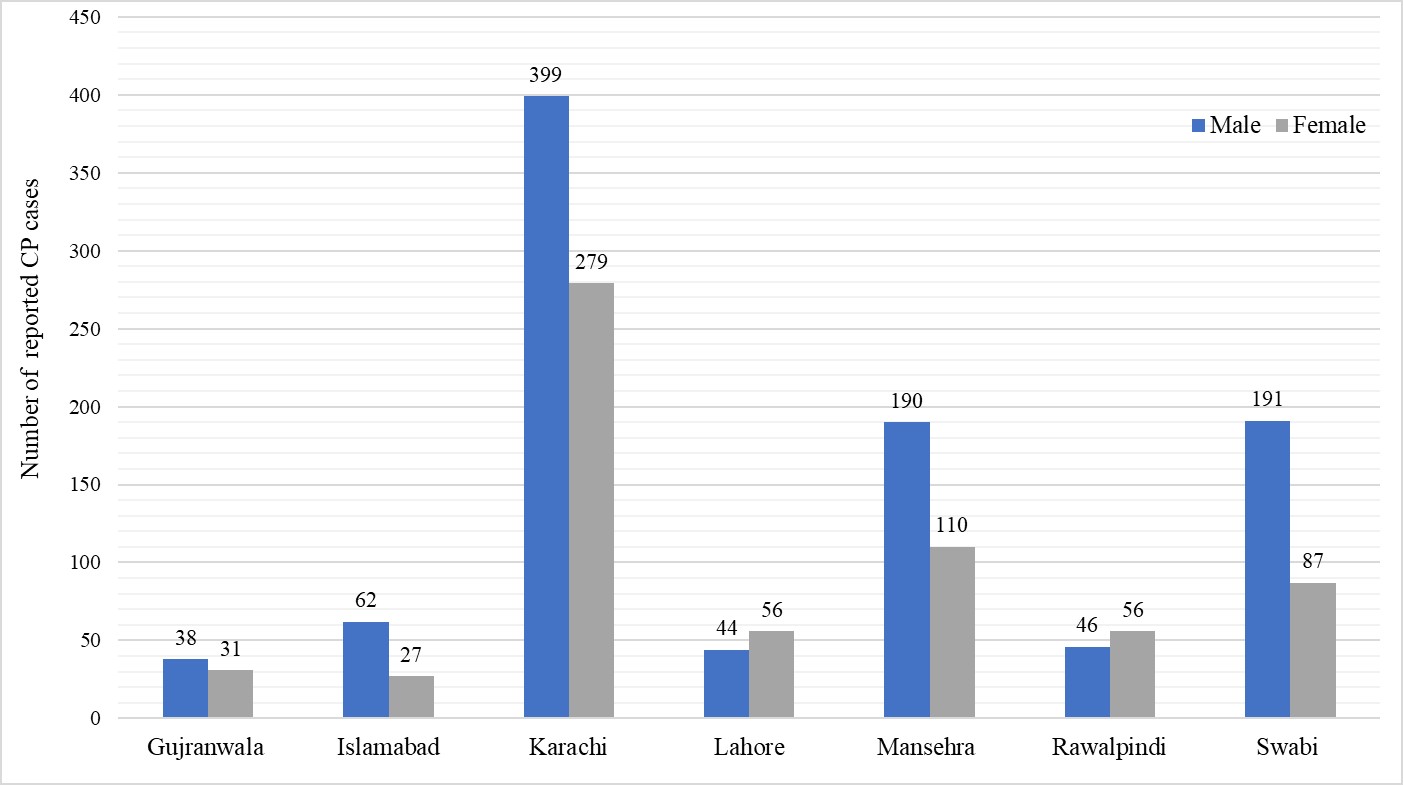
Figure 1. Gender-wise mapping of reported CP cases from different cities of Pakistan (year 2000-2022)
to a brain injury, there are significant neurobiological differences. According to the research, several protective characteristics for the female fetus include differences in pathophysiology, diagnosis, and response to therapy, differences in brain organization, and a lower risk of genetic mutation.14,15 Moreover, better health status has also been reported in CP-inflicted females compared to CP-inflicted males.16 An in-depth understanding of the molecular basis of these sex differences may help in the development of more focused therapies with greater efficacy.
This is the first review of its kind, offering an overview of the gender-based variation of CP in different cities of Pakistan. This review also observed a lack of high-quality studies concerning the prevalence of CP in Pakistan, a limitation in determining gender-based variation.
As the field of CP epidemiology continues to evolve globally, there is a need for more comprehensive and collaborative research efforts in Pakistan. Future studies should aim to establish a national CP registry, improve data collection methods, and investigate the long-term outcomes and quality of life for individuals living with CP. Additionally, efforts should be made to enhance public awareness, improve healthcare infrastructure, and implement preventive measures to reduce the burden of CP in Pakistan. There is an urgent need to collate the data on CP from different cities of Pakistan to facilitate health policy formulation and to seek specific allocation of resources for early diagnosis and management of CP in the country. Even though Pakistani scholars have paid close attention to this disorder in recent years, the scope of published research is rather restricted, and there is still much to be done about this critical neurological disorder.
- Sadowska M, Sarecka-Hujar B, Kopyta I. Cerebral palsy: current opinions on definition, epidemiology, risk factors, classification and treatment options. Neuropsychiatr Dis Treat. 2020;16:1505-18. https://doi.org/10.2147/NDT.S235165
- Oskoui M, Coutinho F, Dykeman J, Jetté N, Pringsheim T. An update on the prevalence of cerebral palsy: a systematic review and meta‐analysis. Dev Med Child Neurol. 2013;55:509-19. https://doi.org/10.1111/dmcn.12080.
- Rafique A, Naz H. A retrospective cohort study of probable risk factors for Cerebral Palsy in Karachi, Pakistan. Rawal Med J. 2023;48:452-7.
- Rafique A. The burden of cerebral palsy in Pakistan: an insight into demographic and preventive plan. Cukurova Med J. 2022;47:1759-60. https://doi.org/10.17826/cumj.1167076.
- Rafique A. An insight into the risk factors for cerebral palsy in Pakistan. Pakistan J Public Health. 2022;12:157. https://doi.org/10.32413/pjph.v12i4.1113
- Ali Z, Umar S, Shah A, Basit A, Oneeb A, Irfan H. Frequency of various types of cerebral palsy amongst the admitted children at a tertiary care hospital and retrospective etiologic analysis on the basis of history, examination and laboratory support. Pak J Med Sci. 2017;11:75-9.
- Khan SA, Talat S, Malik MI. Risk factors, types, and neuroimaging findings in Children with Cerebral Palsy. Pak J Med Sci. 2022;38:1738-42. https://doi.org/10.12669/pjms.38.7.6175
- Bangash A, Hanafi M, Idrees R, Zehra N. Risk factors and types of cerebral palsy. J Pak Med Assoc. 2014;64:103-7.
- Rafique A, Naz H. A Survey-based report on the occurrence of Cerebral Palsy in Urban areas of Karachi. J Pak Med Assoc. 2020;70:1442-44.
- Mansha NM, Anwar S, Afridi IUK, Maqbool S. Cerebral palsy; cross sectional survey. Professional Med J. 2014;21:1166-70.
- Keramat KU, Khalily MA, Bhutta AH, Khattak P, Habib A, Bhutta NI. Etiology evaluation of cerebral palsy in Hazara division Khyber Pakhtunkhwa Pakistan: A cross-sectional survey. J Pak Med Assoc. 2022;72:1315-9.
- Khan A, Ahmad K, Ayaz S, Ayyub A, Akhlaq U. Cerebral palsy in Pakistani children: a hospital based survey. Cukurova Med J. 2014;39:705-11.
- Afzal E, Rabbani MW, Ahmad T, Iqbal I. Association of perinatal adverse events with the type of cerebral palsy. Pak Pediatr J. 2014:38:179–83. Szadvari I, Ostatníkova D, Durdiakova JB. Sex differences matter: Males and females are equal but not the same. Physiology & Behavior. 2023;259:114038. https://doi.org/10.1016/j.physbeh.2022.114038
- Bi D, Chen M, Zhang X, Wang H, Xia L, et al. The association between sex-related interleukin-6 gene polymorphisms and the risk for cerebral palsy. J Neuroinflammation 2014;11:100. https://doi.org/10.1186/1742-2094-11-100
- Turk MA, Scandale J, Rosenbaum PF, Weber RJ. The health of women with cerebral palsy. Phys Med Rehabil Clin N Am. 2001;12:153-68. PMID: 11853034.

An Official Publication of
Islamabad Medical & Dental College
Vol 13 No (Suppl.)
Short Communication
Address of Correspondence
Ammara Rafique
Email:
ammararafique92@gmail.com
Authors’ Contribution: 1Conception; Literature research; manuscript design and drafting; 1Critical analysis and manuscript review; 1Data analysis; Manuscript Editing.
Cite this article. Rafique A. Gender-Based Variation in the Prevalence of Cerebral Palsy
in Pakistan. J Islamabad Med Dental Coll. 2024; 13i(Suppl.): 582-586
DOI: https://doi.org/10.35787/jimdc.
v13i(Suppl.).1091