Types and Frequency of Complications in Laparoscopic Cholecystectomy in Acute Cholecystitis in Tertiary Care Setup
Asma Bibi1, Iftikhar Ahmed2, Bashir Ur Rahman3, Hina Murtaza4, Sohail Moosa5, Gul Muhammad3, Shabir Rana1
1Hazrat Bari Sarkar Medical & Dental College Islamabad, 2,5,6. Akhter Saeed Medical College Rawalpindi,3 Rawal Institute. Of Health Sciences.
Objective: To find the outcomes of laparoscopic cholecystectomy in acute cholecystitis in our hospital setup.
Methodology: This prospective cross-sectional study was conducted in Hazrat Bari Sarkar Hospital Islamabad on 10th Nov 2022 to 30 June 2023. The patients from above 10 years of age with both genders were included by convenient sampling. All Diagnosed cases of gall stone disease with acute cholecystitis, acute on chronic cholecystitis, abscess, and empyema or mucocele gall bladder were included in this study. SPSS 22 was used for data analysis that was recorded on a Performa.
Results: This study included 77 laparoscopic cholecystectomies done for Acute Cholecystitis. 53 female & 24 male patients with female to male ratio of 2.2:1 undergoing laparoscopic cholecystectomies were included in the study. The mean age of patients was 47.6 years + 11.6 SD. The mean operative time was around 90min + 13.5 SD and the mean hospital stay was 2.23 days + 0.77 SD with a range of 1-4 days. The conversion rate to open cholecystectomy was noted in 8 cases. The operative complications were bleeding in 2 cases, minor bile duct injury in 2 cases, surgical site infection in 15 cases and retained stone in 2 cases.
Conclusion: Laparoscopic cholecystectomy for acute cholecystitis has better results in patient outcomes as regards post-operative recovery & length of hospital stay & safety.
Keywords: Laparoscopic Cholecystectomy, Acute Cholecystitis, Outcome
Gall stone disease is common in the Asian population. An annual surgical incidence of 4.2% in males and 14.2% in females was reported lower in a study from Pakistan1 in contrast to western populations with some studies showing that 20% of the women and 8% of the men living in USA are suffering from this disease.1,2 There are two choices of procedures that is laparoscopic and open cholecystectomy. Controversy still exists on time of procedure for laparoscopic cholecystectomy. Early surgery is done within 72 hours while interval laparoscopic surgery after 6 to 8 weeks interval. Due to improved skills in laparoscopic surgery chances of iatrogenic injuries can be successfully avoided by appreciating the limitations and pitfalls of laparoscopic surgery. Major injuries are less due to careful dissection of the Calot’s triangle before dividing any structure2. Nowadays early surgery has been evaluated to cause less surgical trauma, lesser hospital stay, is cheaper and productive of better quality of life as compared to delayed treatment.3 Laparoscopic cholecystectomy in past for acute cholecystitis patients was not indicated because of reported results of high rate of complications including prolonged operation time and higher conversion rates to open surgery. So, in early 1990s, the preferred and commonly practiced mode of treatment for acute cholecystitis was conservative treatment followed by delayed laparoscopic cholecystectomy.3 For acute cholecystitis surgeons have either operated by open or performed laparoscopic surgery still making it a debatable issue. Laparoscopic cholecystectomy in acute cholecystitis is now reported to have no difference in complications and conversion rates when compared to delayed surgery. This is also dependent on the operating surgeon’s experience and good laparoscopic skills.3 Open surgery had been the first choice in the past. However, a revolution in the treatment of gall stones came in 1987, when first laparoscopic cholecystectomy was carried out by PhiIlip Mouret et al in Lyon.3 Acute Cholecystitis is a complication of gall stones that presents with pain right hypochondrium, fever & vomiting. Sonologically there will be increased thickness of gall bladder wall with pericholecystic fluid around it or a stone impacted in the neck of gall bladder. Clinically patient will be having tenderness with Murphy’s sign positive and a phlegmon or a tender mass palpable in right upper quadrant.1, 4 In this study we tried to explore the safety of laparoscopic surgery in acute cholecystitis. The study was aimed to find the outcomes of laparoscopic cholecystectomy in acute cholecystitis.
This prospective cross-sectional study was conducted in Hazrat Bari Sarkar Hospital Islamabad on 10th Nov 2022 to 30 June 2023. The patients from above 10-year age with both genders were included by convenient sampling. All patients who had sonological features of acute cholecystitis and diagnosed acute on chronic cholecystitis, abscess, and empyema or mucocele gall bladder were included in this study. Per-operative cases of acute cholecystitis were also included. The cases with no clinical, radiological or operative evidence of acute cholecystitis were excluded from the study along with choledocholithiasis. All patients risk was assessed by anesthesia department and informed written consent was taken from all patients. Only those patients were included who were willing to be included in the study. During procedure open and closed technique was used for 3 or 4 ports placement after pneumoperitonium creation. In case of thick-walled inflamed gall bladder that was massively distended, aspiration of gall bladder was done before proceeding for the Calot’s triangle dissection. In case of bile spill or pus ooze or stone spill all the material was removed and washing with normal saline 1 to 2 liter was performed. Drain was put in patients where required. Those cases that had difficult anatomy at Calot’s triangle or had injury to vital structures like bile ducts were immediately converted to open surgery and recorded. All data like age, sex, ultrasound report, clinical findings, and comorbidities and any conversion to open cholecystectomy and nature of injury (Iatrogenic), the operation time and length of hospital stay with any complications were recorded on a performa.
Patients were followed on 7th & day 14 after surgery. In case of any complication, they followed till 1 month in senior consultant OPD and record was collected. SPSS 22 was used for data analysis that was recorded on the performa.
This study included 77 laparoscopic cholecystectomies done for Acute Cholecystitis. We had 53 female & 24 male patients with female to male ratio of 2.2:1 undergoing laparoscopic cholecystectomies in the study. The mean age of patients was 47.6 years + 11.6 SD. The mean operative time was around 90min + 13.5 SD and the mean hospital stay was 2.23 days + 0.77 SD with a range of 1-4 days. Conversion rate to open cholecystectomy was noted in 8 cases. The operative complications are given below in Pie Chart.
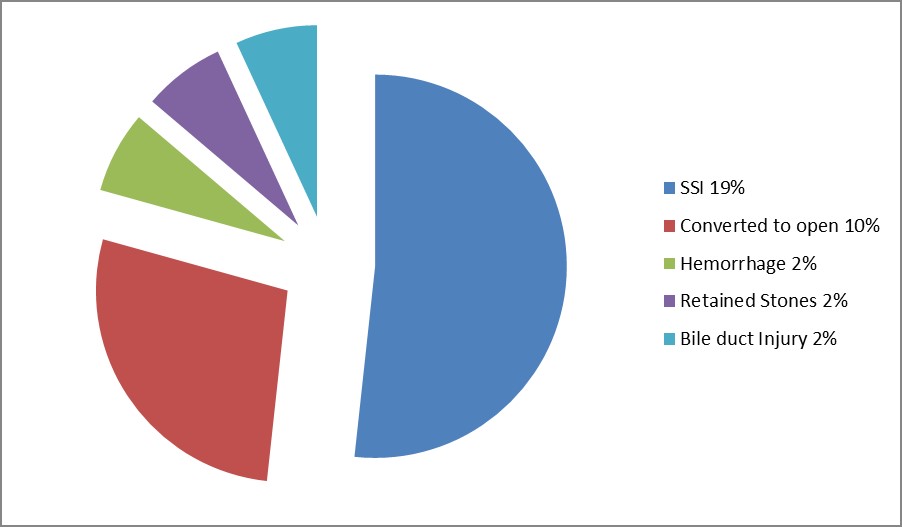
Figure 1: Complications of laparoscopic Cholecystectomy in Acute Cholecystitis
Open surgery had been the first choice in the past. However later laparoscopic cholecystectomy was carried out. Laparoscopic cholecystectomy in past for acute cholecystitis patients was not indicated because of reported results of high rate of complications including prolonged operation time and higher conversion rates to open surgery. For acute cholecystitis surgeons have either operated by open or performed laparoscopic surgery thus making it a debatable issue. Nowadays a lot of work has been done on acute cholecystitis cases being operated by laparoscopic technique to find safety & effectiveness. Our study showed that average surgery time was 90min + 13.5 SD with an average length of stay of 2.23 days with a range of 1-4 days. Hemorrhage was seen in 2 cases (2%), 8 (10%) cases were converted to open due to difficult dissection & dense adhesions. 15 cases had port surgical site infection (19%), 2 had minor bile leak (2%) and 2 had retained gall stones (2%) out of 77 patients. Tayeb found that the common reason for conversion was difficult dissection and unclear anatomy at the Calot's triangle (n=6, 7.2%). One patient was converted to open surgery due to primary hemorrhage. Morbidity rate was 9.6% (8/83 cases), with all being late presentations.2 Ahmad studied Group-A; who underwent early laparoscopic cholecystectomy within 72 hours of presentation. He concluded that early laparoscopic cholecystectomy was better regarding hospital stay, early recovery, complications, and conversion rate compared to delayed laparoscopic cholecystectomy in acute cholecystitis.3 One study conducted by Afzal & colleagues showed mean operative time 49.1+ 22.7 min with 10 cases ended up with in open cholecystectomy a similar rate as in our study. Length of postoperative hospital stay ranged from 19 days to 20 days longer than our study result.4 This study by Ahmed et al compared early versus delayed cholecystectomy in terms of length of stay seen more in delayed cases than early cases “4.59 versus 3.09 days, P = 0.001". Median operative time was significantly longer in those with side effects i.e., 126.4 versus 116 minutes, P = 0.035 found longer than our study.5 Waleed showed a higher conversion rate 58(13.03 %) of laparoscopic converted to open cholecystectomy. The overall mortality was 0.4 % as compared to what we saw in our setup.6 Study by Sayyar had 2% (3 patients) cases converted to open because of dense adhesions in the Calot's triangle. Intra-operative complications were noted in 1.4% patients, those included bile duct injury and leakage from the gallbladder bed similar to our data. Overall morbidity was 1.4% with no mortality.7 Another study by Prof Waqar showed the mean operative time was 68.1 ± 25.31 minutes. Laparoscopy was successful in 140 cases, and three cases were converted into open cholecystectomy. Three patients had biliary injury, two to common hepatic duct and one to accessory duct in gall bladder fossa, during surgery and were managed intra-operatively almost comparable to the study under discussion.8 Mr. Asif compared the mean operating time for ‘Group A’ acute cholecystitis 64±13 min. The mean duration of hospital stay was 03 days ± 1day for group A similar to our result. He concluded that early laparoscopic cholecystectomy is safe and shortens hospital stay.9
Akram found that the median operative time was 47 (38- 54) minutes less than our surgery time while the median hospital stay was 7 (4-10) days more than in our cases.11 Al- Qahtani had inducted 112 patients who underwent emergency laparoscopic cholecystectomy. Conversion to open cholecystectomy was needed in 8 cases similar to our cases. Hospital stay was significantly shorter in the emergency laparoscopic cholecystectomy (P < 0 .0001).12 Serban compared three groups with Group 1: surgery within 3 days or less days of symptoms Group 2: surgery from > 3 to ≤ 7 days of symptoms. Group 3: surgery done for more than 7 days of the symptoms. He noted higher incidence of pus around the gall bladder in group 3 (37.5%), with least in group 1 (4%) and this difference also being statistically significant (p = 0.034) with least complications in group 1 proving better results in early cases.16
Our study had almost comparable results with other local and regional studies showing laparoscopic cholecystectomy to be safe during acute cholecystitis. More work is needed to prevent conversion to open cholecystectomy and experience of a surgeon is also one of the key factors that needs elaboration in future.
- Channa NA, Khand FD, Bhanger MI, Leghari MH: Surgical incidence of cholelithiasis in Hyderabad and adjoining areas (Pakistan). PJMS 2004; 20:13-7.
- Tayeb M, Rauf F, Bakhtiar N. Safety and Feasibility of Laparoscopic Cholecystectomy in Acute Cholecystitis. JCPSP 2018; 28 (10): 798-800.
- Ahmad W, Rehman S, Khan AA, Waheed D, Alam A, Younas S. Outcome of Early Laparoscopic Cholecystectomy in Acute Calculous Cholecystitis. PJP 2020; 16(3):18-21. https://doi.org/10.69656/pjp.v16i3.1235
- Afzal M, Mustafa MN, Zaidi AH, Chaudhry IA, Hanif MS, Shaikh SA. Outcome of Early Laparoscopic Cholecystectomy for Acute Cholecystitis. JIMDC 2016; 5(1):17-20.
- Ahmed I, Khan A, Saeed F, Khan K, Khurshid M, Israr S. Comparative Laparoscopic Cholecystectomy in Acute Cholecystitis in DHQ Abbottabad, KP-Pakistan. P J M H S; 2022:16(9): https://doi.org/10.53350/pjmhs22169124.
- Waleed MS, Khawaja UA, Akhtar M, Sadiq W. Laparoscopic Cholecystectomy: An Early Experience at A Tertiary Care Hospital in Islamabad. CMPHR 2020; 1(4): https://doi.org/10.38207/jmcrcs20201053.
- Sayyar M, Jan Y, Hussain S. Outcome of laparoscopic cholecystectomy in terms of intraoperative complications in a tertiary care hospital. PMJ 2022; 29(1):19-25. https://doi.org/10.29309/TPMJ/2022.29.01.6905
- Waqar SH, Abdullah MT, Shah SA, Malik ZI, Shahzad F. Outcome of Laparoscopic Cholecystectomy in Patients of Acute Cholecystitis. JIIMC 2020; 15 (3):149-53.
- Asif M, Mirza AL, Zafar M. Outcome of Laparoscopic Cholecystectomy in Acute Cholecystitis. APIMS 2018; 173-6. https://doi.org/10.48036/apims.v14i2.105
- Mohammad S, Hinduja T, Fatima S. Complications of Laparoscopic Cholecystectomy in Acute Cholecystitis. JSP (International) 2008; 13 (2): 59-61.
- Akram M , Arsalan M , Kumar V , Ahmed M , Rizwan M , Iqbal W, Abbas K. Outcome of Laparoscopic Cholecystectomy in Acute Pancreatitis Secondary to Gallstones: A Prospective Observational Study from Pakistan. LNJPC 2022; 4(1): 17-21. https://doi.org/10.37184/lnjpc.2707-3521.4.15
- Al-Qahtani HH. Laparoscopic cholecystectomy within one week from the onset of acute cholecystitis: A 6-year experience. JTUMS 2013; 8 (1): 38-43. http://dx.doi.org/10.1016/j.jtumed.2013.01.010.
- Mahmoudvand H, Niazi M, Nadri S. Comparing Complications of Open and Laparoscopic Cholecystectomy in Patients with Acute Cholecystitis in Western Iran. E A SL 2018; 5 (2): 16-21.
- Ghoneim AA, El-Soueni H, Mahmoud M, El-Dawy WA. Evaluation of Laparoscopic Cholecystectomy in Acute Cholecystitis. BMFJ 2020; 37:1-19. https://doi.org/10.21608/bmfj.2020.19368.1159.
- Saber A, Hokkam EN. Operative Outcome and Patient Satisfaction in Early and Delayed Laparoscopic Cholecystectomy for Acute Cholecystitis. Hindawi Publishing Corporation Minimally Invasive Surgery 2014. http://dx.doi.org/10.1155/2014/162643.
- Serban D, Socea B, Balasescu SA, Badiu CD, Tudor C, Dascalu AM, Vancea G, Spataru RI et al. Safety of Laparoscopic Cholecystectomy for Acute Cholecystitis in the Elderly: A Multivariate Analysis of Risk Factors for Intra and Postoperative Complications. Medicina 2021 Mar 2;57(3):230.. https://doi.org/10.3390/ medicina57030230.

An Official Publication of
Islamabad Medical & Dental College
Volume 13 Issue 3
Address of Correspondence
Iftikhar Ahmed
Email:
driftkhar29@gmail.com
Authors’ Contribution: 1,2Conception; Literature research; manuscript design and drafting; 3,4 Critical analysis and manuscript review; 5,6Data analysis; Manuscript Editing.
Cite this article. Bibi A, Ahmed I, Rahman B, Murtaza H, Moosa S, Muhammad G, Rana S. Types and Frequency of Complications in Laparoscopic Cholecystectomy in Acute Cholecystitis in Tertiary Care Setup. J Islamabad Med Dental Coll. 2024; 13(3): 457-460
DOI: https://doi.org/10.35787/jimdc.v13i3.1116