Comparison of Open Haemoridectomy (Milligan-Morgan) and HAL-RAR in the Treatment of Grade III and IV Haemorrhoids
Atia Khatoon, Nauman Anwar Rana, Muhammad Nazim Khan, Rehan Haider, Umar Fayyaz Ghani, Irmaghana Basharat
Department of Surgery, Pakistan Air Force Hospital (PAF), Islamabad
Objective: To compare the efficacy of open hemorrhoidectomy against haemorrhoid artery ligation with recto-anal repair (HAL-RAR).
Methodology: A comparative randomized controlled trial was conducted at general surgery department of Pakistan Aeronautical Complex Hospital Kamra and Pakistan Air Force Hospital Islamabad between June 2021 and December 2022. Total 30 patients diagnosed with hemorrhoids of grades III–IV were assigned randomly to either HAL-RAR (n=15) or hemorrhoidectomy (n=15). Every procedure was a day surgery performed under spinal anesthesia. After 15 days, 30 days, and 6 months patients were re-evaluated. Patients rated their own pain on a visual analog scale. All the data was analyzed by SPSS v 26.
Results: Mean age of the participants was 51.3±6.67 years. HAL-RAR group addressed a greater number of prolapsed hemorrhoidal cushions compared to the hemorrhoidectomy group (2.9 vs 2.02, p = 0.001), and the operation took longer in HAL-RAR group (40 min vs 24 min, p = 0.001). HAL-RAR group had less discomfort in the first 30 days after surgery (p = 0.001). In addition, higher number of patients in HAL-RAR group reported experiencing relief from pain (VAS = 0) after day 7. By day 15, HAL-RAR group had substantially better symptom resolution than the hemorrhoidectomy group. Resolution of bleeding, prolapse, itching, and soiling occurred sooner in HAL-RAR group than in hemorrhoidectomy group during the 30-day follow-up.
Conclusion: The symptoms of hemorrhoids are resolved with less discomfort with HAL-RAR than after hemorrhoidectomy, and recovery time is shorter.
Keywords: Hemorrhoids; Hemorrhoidectomy; Ligation; Pain measurement; Rectal prolapse; Visual analog scale.
Around 70% of the working population may have hemorrhoidal disease (HD) at some point in their lives, and it is now often regarded as a typical illness of civilization or lifestyle.1 The severity of most illnesses is proportional to the stage of the disease at when they were diagnosed. Diet and medicine are both viable therapeutic options for treating hemorrhoidal illness. Good outcomes may be obtained with infrared coagulation, sclerotherapy, and rubber-band ligation in the early stages of hemorrhoidal illness. Grade III or IV haemorrhoids need surgical removal, which is called a hemorrhoidectomy.2 Hemorrhoidectomy (HD), either open (Milligan-Morgan) or closed (Ferguson), is the conventional treatment for stages 3 and 4 of the condition. They, however, often need a longer hospital stay and substantial postoperative discomfort.3 Traditional hemorrhoidectomy methods, such as the Milligan-Morgan and Ferguson procedures and their variants, have been shown in the majority of randomised clinical studies to be associated with a wide variety of problems. Hemorrhoidectomy rehabilitation times after either open or closed hemorrhoidectomy are similar, according to the vast majority of studies. For the last two decades, researchers have worked to find ways to lessen the discomfort felt by patients after a hemorrhoidectomy.4,5 Less invasiveness in surgery has been sought for due to the negative effects it has on patients, including prolonged recovery times and rare but serious complications. Two new methods emerged towards the end of the twentieth century to compete with the traditional hemorrhoidectomy. Longo initially described the stapled hemorrhoidopexy operation in 1998, and since then, it has gained popularity as a less invasive option for treating hemorrhoidal illness.6 Randomized trials have shown that stapled hemorrhoidopexy is more effective than excisional hemorrhoidectomy at reducing postoperative pain, shortening hospital stay duration, and speeding up the time it takes to return normal activities following surgery, but it is still unable to completely eliminate prolapse.7 Rectal anastomotic leakages may include pelvic sepsis, rectal obstruction, perforation, recto-vaginal fistula, sphincter damage, retroperitoneal hematoma, and Fournier gangrene are some of the most serious surgical complications that can occur after a stapled hemorrhoidopexy. Complication rates range from 6 to 31 percent.8 HAL-RAR therapy, a minimally invasive treatment for high-grade hemorrhoids, involves the integration of HAL (hemorrhoidal artery ligation) with a procedure known as mucopexy, which lifts the hemorrhoidal prolapses.9-11 The study objective was to compare the efficacy of hemorrhoidectomy against haemorrhoid artery ligation with recto-anal repair (HAL-RAR).
After the ethical approval from the institutional review board, this comparative randomized controlled trial was conducted at general surgery department of Pakistan Aeronautical Complex Hospital Kamra and Pakistan Air Force Hospital Islamabad between June 2021 and December 2022. Through non-probability consecutive patients between age 18-60 years, with ASA (American Society of Anesthesiologists) grade I and II, with grade III and IV haemorrhoids (Goligher’s classification), and with scheduled haemorrhoids surgery were included. Patients with ASA ≥ 3, associated recto-anal disease, chronic pain, or mental illness were excluded from the present study.
Total 30 patients were recruited and were divided randomly into two groups based on the surgery type: Group A- hemorrhoidectomy (n=15), Group B- HAL-RAR (n=15). Hemorrhoidectomy or HAL-RAR, was done as an outpatient treatment requiring just short term hospitalisation. The patient was given spinal anesthesia and lithotomy posture was used for surgery. All surgeries were carried out by the same surgeon to remove any potential surgeon-related bias. A 5 ml bupivacaine 0.5% ano-coccygeal ligament block was applied after the patient's perineal skin was cleansed and sterile drape was placed over the perineal area. By inserting a surgical proctoscope into the anal canal and injecting 0.5% bupivacaine with 1:200,000 adrenaline, the hemorrhoidal tissue was lifted.
The Milligan-Morgan method was used to do the hemorrhoidectomy. Before the excision, vicryl 1 suture was used to ligate the vascular pedicle. Every individual had a three-quarter hemorrhoidectomy. All HAL-RAR patients were treated without Doppler guidance but finger detection method. The lithotomy posture was used for the HAL-RAR operation. The precise locations of all terminal branches of the superior rectal artery were identified through intraoperative palpation, specifically at anal clock positions 2-3 cm above the anorectal junction. Vicryl 2/0 was used to place a suture in the shape of a "figure of eight" was used to bind each of the artery on both sides. The lack of pulsation distal to the sutures indicated the obliteration of the arteries. By placing longitudinal continuous running sutures in 3-4 quadrants, transanal mucopexy was performed. Post and preoperative complications were noted.
Pain levels were measured by visual analog scale (VAS) that range from 0 (no pain) to 10 (the greatest pain conceivable). This is how the patient rated their level of pain. Three hours after the surgery, the first pain rating was taken. After that, a mean pain score was determined by recording the severity of discomfort each day from the 1st to the 7th postoperative day. In order to measure the long-term effects of surgery, patients were asked to fill out a standard questionnaire both before and after the procedure. Prolapse, bleeding, itching, and soiling were all assessed.
Statistics were often shown using mean, standard deviation, median, and range. We used chi-square or Fisher's exact test for the analysis of categorical variables, while the independent t-test or Mann-Whitney U test was utilized to evaluate continuous ones. SPSS v 26 was used to generate the statistical findings. The probability p-value ≤ 0.05 was deemed as statistically significant.
30 patients filling the inclusion criteria were enrolled in the present study. Baseline demographic information and clinical parameters of patients were measured (Table 1). Mean age of the participants was 51.3±6.67 years. In both groups majority of the participants were males. Duration of disease in both groups were 49.4±3.8 and 54.6±5.11 months (p=0.005). Table-2 summarizes information on operations and their immediate after effects. HAL-RAR group addressed a greater number of prolapsed hemorrhoidal cushions compared to the hemorrhoidectomy group (2.9 vs 2.02, p = 0.001), and the operation took longer in HAL-RAR group (40 min vs 24 min, p = 0.001). Statistically significant differences in postoperative pain relief between HAL-RAR and haemohorridectomy patients persisted until day 15 (p = 0.001, Figure 1). After 30 days, there was no difference in postoperative discomfort between the two surgical methods. The most common reason for seeking medical attention was bleeding in the rectal area
Table-I: Baseline demographic and clinical parameters of the study participants, n=30 |
|||
Parameters |
HAL-RAR (n=15) |
Hemorrhoidectomy (n=15) |
p value |
Age (years) |
51.7±6.84 |
50.9±6.5 |
.789 |
Gender (male/Female) |
11/4 |
13/2 |
.164 |
Grade (III/IV) |
12/3 |
11/4 |
.334 |
HD Symptoms |
|||
Bleeding |
14 (93.3%) |
13 (86.7%) |
.257 |
Prolapse |
12 (80%) |
13 (86.7%) |
.241 |
Itching |
7 (46.7%) |
6 (40%) |
.899 |
Pain |
7 (46.7%) |
7 (46.7%) |
.994 |
Soiling |
6 (40%) |
8 (53.3%) |
.312 |
Duration of HD (months) |
49.4±3.8 |
54.6±5.11 |
.005 |
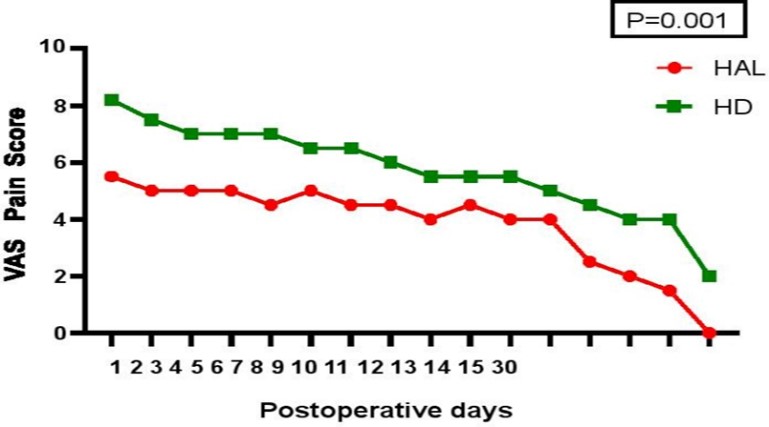
Figure 1: Daily postoperative pain score in the study groups, n=30
Table-II: Surgical procedure and immediate postoperative results, n=30 |
|||
Post-surgical parameters |
HAL-RAR (n=15) |
Hemorrhoidectomy (HD) (n=15) |
p value |
Surgical Time (minutes) |
39.9±1.90 |
23.6±2.2 |
.001 |
HAL |
7.25±0.31 |
- |
- |
RAR/ cushions excised |
2.9±0.21 |
2.02±0.15 |
.001 |
"Day case" surgery |
3/15 |
4/15 |
.001 |
Bleeding |
3/15 |
2/15 |
.334 |
Urinary retention |
3/15 |
2/15 |
.334 |
Re-intervention |
2/15 |
1/15 |
.334 |
Resolution of rectal bleeding was seen in HAL-RAR group sooner than in the hemorrhoidectomy group (Figure 2). Patients' second most common complaint was hemorrhoidal prolapse. After 15 days surgery, HAL-RAR had a trend towards improved prolapse resolution. HAL-RAR tended to alleviate itchiness sooner than hemorrhoidectomy did.
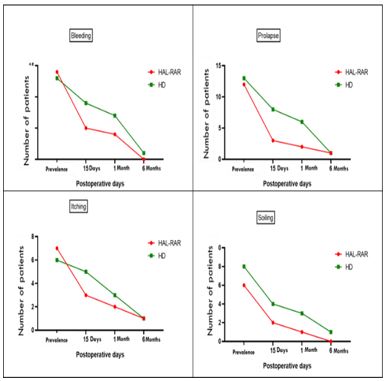
Figure 2: Resolution of symptoms in both study groups, n=30
Hemorrhoidal disease treatment should move away from hemorrhoidectomy, the current gold standard, and towards less invasive, continence-preserving methods that yield satisfactory relief of hemorrhoid symptoms. The treatment of HD grades III and IV with HAL-RAR has been shown to be effective in many prospective series,6-11 with recurrence rates ranging from 9% to 27%. Our data show that after 1 year of follow-up, only 2% of patients with grades III-IV haemorrhoids report a return of symptoms when treated with HAL-RAR. Previous prospective randomised studies comparing HAL-RAR with hemorrhoidectomy,12,13 showed that HAL-RAR resulted in decreased postoperative pain and morbidity with a comparable long-term cure/recurrence rate, with chronic problems reported exclusively after hemorrhoidectomy. Aigner et al questioned the need for ligating hemorrhoidal arteries before the occurrence of mucopexia and instead concluded that relocating the hemorrhoidal zone is the most important factor in successful treatment.14 We think it's a new approach that needs additional research and comparisons to existing methods to determine whether or not it's successful and safe. In our research, patients who had HAL-RAR saw a considerable reduction in pain within the first 15 days after surgery; from day 15, the pain curve in hemorrhoidectomy steadily declined, to achieve parity between the two procedures by day 30. The perception of pain is dependent on several variables outside surgical technique, which may explain the wide range of postoperative discomfort felt by individuals within each group.15
The majority of patients who have HAL-RAR report less postoperative problems than those who undergo hemorrhoidectomy, particularly in cases where bleeding was the primary issue.16 This distinction may be the result of delayed wound healing after hemorrhoidectomy, which may result in discomfort, mild bleeding, oedema of unresected cushions and muco-skin bridges, itching, and exudate symptoms that are otherwise comparable to those of hemorrhoidal illness. Despite the fact that both approaches resulted in comparable symptom persistence, morbidity, and recurrence, further prospective and randomised studies with extended follow-up are required to identify an effective alternative to hemorrhoidectomy. So, that we may collect more data over a longer period of time, we are keeping our trial active. Hemorrhoids of grades III and IV may be treated as outpatient procedures in ambulatory surgical centres, since the HAL-RAR group had much reduced postoperative discomfort and no major problems.
Postoperative pain/discomfort after HAL-RAR is less severe and lasts for a shorter time than it does after hemorrhoidectomy, and fewer patients report complications after having their hemorrhoidal problems resolved with HAL-RAR. HAL-RAR is more likely to be performed as a day case than hemorrhoidectomy is because it causes less acute discomfort and has a lower likelihood of complications.
- Chaudhry WM, Aamir H, Mohsin A, Chaudhry SM, Ghufran S, Jamil M. Outcome of Haemorrhoidal Artery Ligation and Recto Anal Repair (HAL-RAR) with Doppler Guidance for Symptomatic Grade-II, III and IV Internal Haemorrhoids. Ann King Edw Med Univ. 2023;29(2):98-104. https://doi.org/10.21649/akemu.v29i2.5445
- Abbas ST, Raza A, Ch IM, Hameed T, Hasham N, Arshad N. Comparison of mean pain score using topical and oral metronidazole in post milligan morgan hemorrhoidectomy patient; A randomized controlled trial. Pak J Med Sci. 2020;36(5):867-871. https://doi.org/10.12669/pjms.36.5.1796
- Trenti L, Biondo S, Espin-Basany E, Barrios O, Sanchez JL, Landaluce A, et al. Transanal Hemorrhoidal Dearterialization with Mucopexy vs Vessel Sealing Device Hemorrhoidectomy for Grade III-IV Hemorrhoids: Long-term Outcomes from the THDLIGA-RCT Randomized Clinical Trial. Dis Colon Rectum. 2022;66(8):e818-e825. https://doi.org/10.1097/DCR.0000000000002272
- Giuliani A, Romano L, Necozione S, Cofini V, Di Donato G, Schietroma M, et al. Excisional Hemorrhoidectomy Versus Dearterialization With Mucopexy for the Treatment of Grade III Hemorrhoidal Disease: The EMODART3 Multicenter Study. Dis Colon Rectum. 2023;66(12):e1254-e1263. https://doi.org/10.1097/DCR.0000000000002885
- Ida Bagus B, Ida Bagus M, Ida Ayu S. A Preliminary Study on Pain Reduction and Shorter Length of Stay on Grade III of Internal Hemorrhoid Patients Undergoing HAL-RAR (Haemorrhoid Arteri Ligation with Recto Anal Repair) with no Doppler Guided Technique. Iran J Colorectal Res. 2022;10(1):40-42. https://doi.org/10.5455/IJMRCR.SafetyandEffectivenessofHAL-RAR
- Saleem I, Shirazi A, Farooq S, Ullah B, Ghayour L, Haider S, et al. Comparison of outcome between open haemorrhoidectomy versus trans-anal doppler guided hemorrhoidal artery ligation with recto-anal repair in 3rd and 4th degree haemorrhoids. J Ayub Med Coll Abbottabad. 2023;35(1):95-99. https://doi.org/10.55519/JAMC-01-10975
- Miyamoto H. Minimally invasive treatment for advanced hemorrhoids. J Anus Rectum Colon. 2023;7(1):8-16. https://doi.org/10.23922/jarc.2022
- Ezz RS, Abdel-Monem AH, Abdel Wahed HE. Evaluation of Doppler-Guided Hemorrhoidal Artery Ligation (DGHAL) as a Novel Technique in Management of Hemorrhoids. Ain-Shams J Surg. 2023;16(2):130-137. https://doi.org/10.21608/asjs.2023.298752
- Noguerales F, Diaz R, Salim B, Piniella F, Landaluce A, Garcea A, et al. Treatment of hemorrhoidal disease by dearterialization and hemorrhoidopexy. Experience of several specialized units. Spanish Surg. 2015;93(4):236-240. https://doi.org/10.1016/j.cireng.2014.04.007
- Parello A, Litta F, De Simone V, Campennì P, Orefice R, Marra AA, et al. Haemorrhoidal haemodynamic changes in patients with haemorrhoids treated using Doppler-guided dearterialization. BJS Open. 2021;5(2):zrab012. https://doi.org/10.1093/bjsopen/zrab012
- Sherif TM. Doppler-guided hemorrhoidal artery ligation with recto-anal repair versus Milligan Morgan hemorrhoidectomy for grade IV hemorrhoids. Egypt J Surg. 2016;35(3):155-161. https://doi.org/10.4103/1110-1121.189431
- Rorvik HD, Campos AH, Styr K, Ilum L, McKinstry GK, Brandstrup B, et al. Minimal open hemorrhoidectomy versus transanal hemorrhoidal dearterialization: the effect on symptoms: an open-label randomized controlled trial. Dis Colon Rectum. 2020;63(5):655-667. https://doi.org/10.1097/DCR.0000000000001588
- Symeonidis D, Spyridakis M, Zacharoulis D, Tzovaras G, Samara AA, Valaroutsos A, et al. Milligan-Morgan hemorrhoidectomy vs. hemorrhoid artery ligation and recto-anal repair: a comparative study. BMC Surg. 2022;22(1):416. https://doi.org/10.1186/s12893-022-01861-z
- Aigner F, Kronberger I, Oberwalder M, Loizides A, Ulmer H, Gruber L, et al. Doppler‐guided haemorrhoidal artery ligation with suture mucopexy compared with suture mucopexy alone for the treatment of Grade III haemorrhoids: a prospective randomized controlled trial. Colorectal Dis. 2016;18(7):710-716. https://doi.org/10.1111/codi.13280
- Leabi O, Abed A, Al-Maliki W. Doppler-Guided Hemorrhoid Artery Ligation with Recto-Anal Repair Outcome on Female Patients in Basra: Assessment Study: Doppler-Guided Hemorrhoid Artery Ligation with Recto-Anal Repair Outcome on Female Patients in Basra: Assessment Study. Iraqi Natl J Med. 2021;3(1):84-92. https://doi.org/10.37319/iqnjm.3.1.8
- Patel R, Rehman A, Baig M, Kazem MA, Khan A. A cohort study analysing outcomes following transanal haemorrhoidal dearterialisation (THD). Surgeon. 2021;19(2):72-76. https://doi.org/10.1016/j.surge.2020.02.008

An Official Publication of
Islamabad Medical & Dental College
Volume 13 Issue 3
Address of Correspondence
Atia Khatoon
Email:
dr.atia14@googlemail.com
Authors’ Contribution: 1,2Conception; Literature research; manuscript design and drafting; 3,4 Critical analysis and manuscript review; 5,6Data analysis; Manuscript Editing.
Cite this article. Khatoon A, Rana NA, Khan MN, Haider R, Ghani UF, Basharat I. Comparison of Open Haemoridectomy (Milligan-Morgan) and HAL-RAR in the Treatment of Grade III and IV Haemorrhoids. J Islamabad Med Dental Coll. 2024; 13(3): 437-442
DOI: https://doi.org/10.35787/jimdc.v13i3.1124